
Acceleris Labs argues that most small teams fail to adopt AI not because they lack access to tools, but because nobody connects the tool to the actual work. General demos that showcase twenty impressive capabilities rarely translate into daily use. Instead, the post recommends a practical rollout: pick two or three real, recurring tasks — like summarizing email threads, drafting routine replies, or turning meeting notes into action lists — and train people using their own documents inside the tools they already use. Providing reusable templates and saved prompts ensures people don't start from a blank box each time.
The guide emphasizes that rules matter more than tool selection. Teams should use business accounts (not personal ones) to keep company data out of model training, write a concise one-paragraph data policy, and always have a human review AI-generated output before it reaches a customer. On tool choice, the advice is pragmatic: pick whatever fits the team's existing workflow, whether that's Microsoft Copilot, ChatGPT, or Claude — changing tools later is easy, but changing habits is the hard part. The post also draws a useful line between training and automation: if the same AI-assisted step happens fifty times a week, it should be built into the workflow as automation rather than relying on a person prompting each time.
Jev is a new AI classifier developed by Diogo Almeida, whose research contributed to building ChatGPT. Unlike conversational LLMs, Jev takes an input and an output schema, then returns probability scores for each possible answer in roughly 200 milliseconds. Ryan Vogel of the OpenCode founding team demonstrated its capabilities by running 1,700 real emails through it — getting category, priority, spam score, and reply score for each — at a total cost of just 18 cents. The output is type-safe numerical data, making it immediately usable in code without parsing natural language responses.
The core use cases center on decision-making at scale: lead scoring (rating contact form inquiries from 0 to 1), email triage, support ticket routing, and even video clip discovery where Ryan built a tool in 10 minutes that identified 17 strong moments in about 3 seconds. Greg from The Startup Ideas Podcast frames Jev as an "AI traffic cop" — high-confidence, high-value inputs get routed to humans immediately, lower-confidence ones go to automation or LLM drafts, and very low-confidence inputs get ignored.
The article also covers where Jev breaks down: Ryan tested it on Bitcoin buy/hold/sell signals and it performed poorly, suggesting it's not suited for complex predictive tasks requiring cross-referencing external data. He recommends keeping Jev in a "heavy advisory role" rather than giving it full autonomous control. The practical takeaway is to identify any expensive queue of incoming information in a business — inbox, contact form, support tickets — and place Jev at the front of it for near-instant, extremely cheap classification.
Manor AI is introduced as a self-hosted AI agent workspace designed specifically for small businesses and lean teams. The platform consolidates agents, tasks, tools, and knowledge into a single unified environment, moving beyond the limitations of a simple chat window interface.
The key value proposition centers on enabling teams to run AI agents against team knowledge and scoped tools, with built-in routing for sensitive data. By offering self-hosting, Manor AI addresses privacy and control concerns that small teams may have when using cloud-based AI platforms. The post by Dan Kornas positions the product as a practical, integrated solution for organizations looking to operationalize AI agents in a structured and secure manner.
Northwestern's Center for Human-Computer Interaction + Design (HCI+D) hosted a virtual panel featuring MIT economist David Autor and Microsoft chief scientific officer Eric Horvitz, both contributing authors to the National Academies' "Artificial Intelligence and the Future of Work" report. The discussion explored how AI, classified as a general-purpose technology akin to electricity and the steam engine, will reshape the labor market unevenly — automating certain tasks while creating new roles that complement human expertise in decision-making and complex problem-solving. Autor emphasized AI's value in supplementing human judgment in high-stakes situations, while Horvitz stressed that collaborative possibilities between humans and AI have barely been explored.
The panelists highlighted sector-specific applications in education, healthcare, and frontier science, including AI-driven drug discovery and protein structure prediction. Horvitz pointed to a collaboration with Northwestern's Shana Kelley on an AI virtual cell that can simulate molecular and cellular behavior in silico. Both experts warned against a passive, wait-and-see approach, advocating instead for proactive policy, governance, and training to ensure AI promotes shared prosperity rather than increased economic disparity. As Autor quoted philosopher Joshua Cohen: "The future is not a prediction exercise. It is a design exercise."
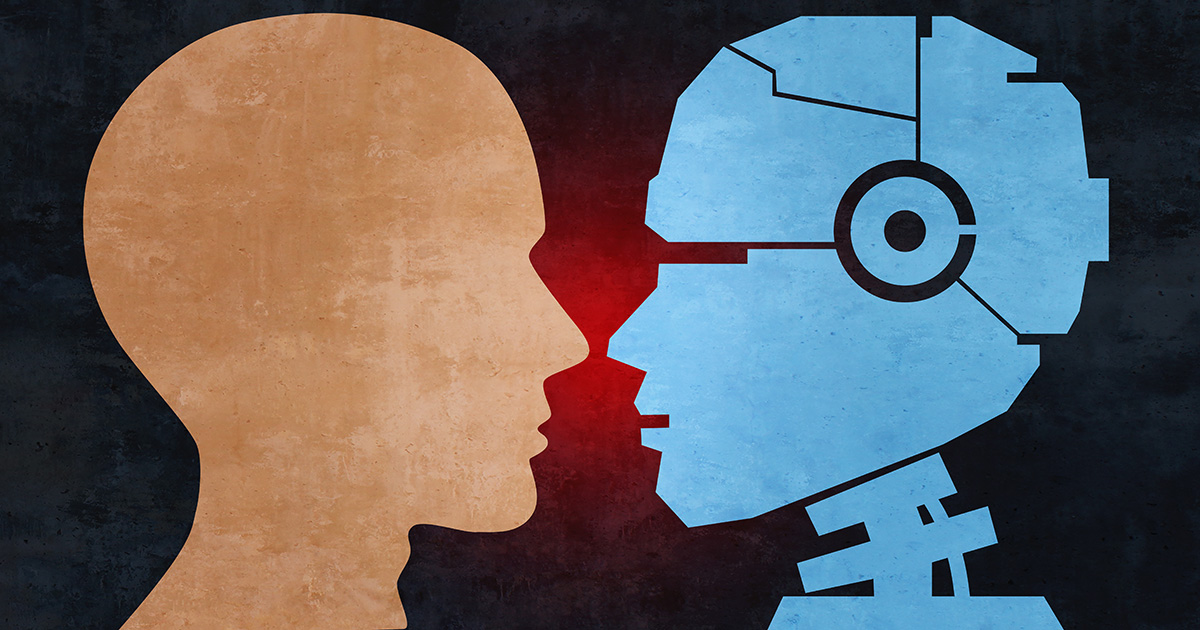
IBM's exploration of AI and the future of work examines how artificial intelligence is fundamentally reshaping the modern workplace through technologies like generative AI, AI assistants, and agentic AI. The article highlights that while up to 30% of hours worked in the US economy could be automated by 2030, the World Economic Forum estimates that new technologies could create 97 million new jobs even as 85 million are displaced. Organizations deploying AI at an operational level rather than a skills-based level outperformed peers by 44% on metrics like employee retention and revenue growth.
The piece outlines four major ways AI is changing work: increasing task productivity by offloading routine tasks, transforming workflows through human-AI collaboration, creating new job roles as the labor market shifts, and accelerating innovation by revealing previously invisible opportunities. A key theme is the transition from content creation to curation and direction, where workers spend less time building from scratch and more time reviewing and refining AI-generated outputs. Skills like AI prompting, critical evaluation, and emotional intelligence are becoming increasingly valuable.
For business leaders, the article prescribes several best practices: developing an AI strategy aligned with business objectives, building robust data infrastructure with strong governance, investing in workforce development and change management, and balancing short-term productivity gains with long-term organizational transformation. The authors emphasize that 67% of CEOs believe corporate differentiation depends on having the right expertise in the right positions, yet only 20% of executives assign HR departments responsibility for directing future work strategies—a gap that forward-looking companies must close.

In this 2017 opinion piece, Rob Enderle explores the critical distinction between using AI to augment human workers versus replacing them entirely. Drawing from discussions between IBM CEO Ginny Rometty and Salesforce CEO Mark Benioff at IBM Interconnect 2017, Enderle argues that while both companies' AI platforms — Watson and Einstein — are designed to enhance human capabilities, the workforce's lack of readiness for AI could push organizations toward the easier but more dangerous path of outright replacement, leading to mass unemployment and social instability.
A central challenge is trust — decision-makers often rely on intuition over data, partly because data quality has historically been unreliable. Enderle argues that building trustworthy AI requires first ensuring data is complete and unbiased, then re-educating decision-makers to rely on AI-driven insights. He highlights H&R Block's use of Watson as a successful example of human-AI coupling, where tax preparers work alongside Watson as a peer advisor, producing results superior to what either could achieve alone.
Enderle emphasizes that true augmentation requires collaborative learning — not just humans training AI systems, but AI actively helping humans improve their skills and address shortcomings. Without this reciprocal partnership, the augmentation model risks falling short, potentially defaulting to a replacement-driven future with dystopian consequences. The piece remains a relevant framing of the ongoing debate about AI's role in the workforce.

Heather Stewart examines the growing tension between AI's potential to augment human workers versus replacing them entirely, framing it as a pivotal choice that will determine the future of work. Drawing from the 2026 World Economic Forum at Davos, she highlights concerns from figures like IMF managing director Kristalina Georgieva, who warned of a coming "tsunami" of AI-driven job losses, and Stanford's Erik Brynjolfsson, whose research shows younger US workers are already experiencing displacement in sectors where AI automates rather than augments labor. Brynjolfsson's concept of "The Turing Trap" argues that designing AI to replicate humans rather than enhance them shifts economic and political power away from workers toward those who control the technology.
The piece contrasts Elon Musk's enthusiastic vision of "more robots than people" with Microsoft CEO Satya Nadella's warning that AI risks losing its "social permission" if it fails to demonstrably improve people's lives. Stewart notes that while 81% of UK CEOs are prioritizing AI investment, only 30% have seen cost reductions — suggesting intense pressure to cut jobs is imminent. Trade unions, represented by AFL-CIO president Liz Shuler, are demanding a seat at the table, warning of "revolution" if productivity gains are hoarded by tech companies rather than shared with workers. The article makes a compelling case that policymakers must use tax incentives and regulation to steer AI development toward human augmentation rather than wholesale replacement.

Anton Korinek shares a cover story by Josh Tyrangiel in The Atlantic examining how AI will affect the labor market, with the provocative framing that "this time may be different." Korinek expresses appreciation for the candid reporting and notes he is featured in the piece alongside prominent figures including David Autor, Reid Hoffman, and Gina Raimondo. The post highlights growing serious discourse around AI-driven labor displacement and signals that mainstream outlets are treating the topic with increasing urgency.
Bercan Kılıç, founder of microagi, lays out a sweeping thesis on how general-purpose robotics will create material abundance by 2029 — but warns that the social and political consequences could derail this future entirely. The essay argues that prevailing economic models of displacement are insufficient because they assume displaced cognitive workers can transition to physical roles, when in reality physical AI will automate those roles simultaneously. Recent breakthroughs from Figure AI, Google DeepMind, Skild AI, and others suggest a "GPT moment" for robotics is imminent, with AI systems accelerating the research cycle itself.
The piece turns specifically to Europe's vulnerability: the continent owns neither the intelligence layer (dominated by the U.S.) nor the manufacturing base (dominated by China), yet its welfare states depend heavily on taxing labor. Kılıç outlines three futures for Europe — blocking deployments and falling behind, adopting foreign robotics without building domestic capacity (leading to dependency and social unrest), or fully embracing robotics while building a new economic settlement. The preferred third path involves Europe developing its own models and hardware, taxing automation returns domestically, and pursuing what the author calls "Interstellar": a principle that humanity's ambitions must always exceed its productive capacity, ensuring people remain necessary even when machines surpass them at nearly everything. The essay draws historical parallels to the French Revolution, the Luddites, and the Apollo program to argue that without a credible answer to how people retain status and purpose, societies will politically block the very technology that could improve all their lives.

Mediagazer highlights a report by Richard Rushfield of The Ankler examining Human Generative Workflows, a framework developed by a group led by Kathleen Kennedy. The framework aims to ensure that AI use in Hollywood remains under human creative control, establishing guidelines for how generative AI tools can be integrated into the entertainment industry without displacing human decision-making in the creative process.
This development signals a significant effort within the film and entertainment industry to proactively shape the relationship between AI technology and creative labor, a topic that has been central to recent industry debates and labor negotiations.
Krea announces the open beta for Krea 3, which it describes as a new frontier for image editing. The tool delivers end-to-end 2K resolution edits in under 8 seconds, claims quality on par with Nano Banana Pro or GPT Image 2.5, and offers bounding box control along with precise multi-turn editing capabilities.
This release positions Krea as a competitive player in the rapidly evolving AI image editing space, emphasizing both speed and output quality while introducing more granular control mechanisms that could appeal to professional and creative users seeking efficient, high-fidelity workflows.
Jerry Liu, founder of LlamaIndex, presents a talk on building AI agents capable of genuinely automating knowledge work. The presentation focuses on the practical challenges and architectural considerations involved in creating agent-based systems that go beyond simple chatbot interactions to handle complex, real-world knowledge tasks.
While the full content of the video is not available from the page extract, the talk is positioned within the broader conversation around agentic AI workflows — systems where LLMs are orchestrated to reason, plan, retrieve information, and take actions autonomously. LlamaIndex, as a prominent framework for building LLM-powered applications with data connectivity, provides the backdrop for Liu's insights into what it takes to move from prototype agents to production-ready automation of knowledge-intensive processes.

Sanjeev Sharma argues that Knowledge Graphs are the critical missing infrastructure layer for AI-powered SRE and DevOps agents. He opens with a familiar scenario — a 2 AM incident where institutional knowledge is locked in the heads of senior engineers — and contends that simply deploying AI agents without structured, contextual knowledge leads to two predictable failure modes: hallucinated confidence (where RAG-based retrieval surfaces loosely relevant but incorrect context) or paralysis by uncertainty (where the agent escalates everything to humans, adding no value). The key distinction he draws is that Knowledge Graphs provide deterministic, multi-hop reasoning over explicit relationships between entities, unlike vector databases and RAG systems which offer only probabilistic text retrieval.
The post outlines a concrete architecture for a DevOps Knowledge Graph spanning five entity categories: infrastructure, software delivery, operational, human/organizational, and policy/knowledge entities. Sharma introduces the concept of context graphs — an extension that captures not just system topology but decision traces: records of why decisions were made, what exceptions were granted, and who approved them. He argues this layer externalizes the institutional memory that currently lives in Slack threads and engineers' heads, compounding in value over time as AI agents contribute their own reasoning traces back to the graph.
Sharma grounds the argument in practical numbers — citing 4.87 hours saved per incident with AI-assisted response and 30–70% MTTR reductions — while honestly acknowledging challenges including ontology design complexity, data quality propagation, immature standards for decision traces, and the reality that AI has sometimes shifted toil rather than eliminated it. His pragmatic advice for teams that haven't started: begin with machine-readable postmortems, connect service catalogs to observability tooling, enable automatic relationship discovery from service mesh telemetry, and treat operational knowledge as a first-class engineering artifact rather than a stale wiki page.

In this Harvard Business Review article, H. James Wilson and Paul R. Daugherty examine how artificial intelligence is reshaping work across industries — not by replacing humans, but by augmenting their capabilities. Drawing on research involving 1,500 companies, the authors argue that the greatest performance gains come when humans and AI collaborate, each enhancing the other's strengths. AI is increasingly proficient at tasks like diagnosing disease, translating languages, and providing customer service, yet the authors contend that fears of wholesale job replacement are overblown.
The concept of collaborative intelligence is central to the piece: rather than viewing automation as a zero-sum competition between humans and machines, companies should focus on designing workflows where AI handles routine cognitive tasks while humans contribute creativity, judgment, and interpersonal skills. The article emphasizes that organizations achieving the most significant improvements are those that reimagine business processes around human-AI collaboration rather than simply substituting machines for people. This framing offers a practical and optimistic roadmap for leaders navigating AI adoption.

GitHub announces the Copilot SDK, which allows developers to embed the same AI capabilities that power Copilot Chat directly into their own applications. To demonstrate its potential, developer @acolombiadev integrated the Copilot SDK into a React Native app, using it to generate AI-powered issue summaries.
The demo highlights production-ready patterns including graceful degradation, suggesting that the SDK is designed with real-world reliability in mind. This marks a significant step in GitHub's strategy to make its AI tooling extensible beyond its own platform, enabling third-party developers to leverage Copilot's capabilities in custom workflows and mobile applications.
Lewis Carhart shares that HubSpot quoted his small sales team of fewer than 10 people $80,000 per year for CRM software, prompting him to spend half a day vibe coding their own CRM instead. He declares that SaaS is probably dead, suggesting that AI-powered development tools have made it feasible to build custom internal tools rapidly rather than paying steep enterprise software prices.
The custom CRM was built using an agents-powered stack featuring Vercel, Context, and Eve, with charts styled using dither-kit by Grim. The post reflects a growing sentiment in the tech community that AI coding assistants and modern development platforms are dramatically lowering the barrier to building bespoke software, potentially threatening the traditional SaaS subscription model for common business tools like CRMs.
NVIDIA presents a session from GTC (GPU Technology Conference) hosted by Karoly Zsolnai-Fehér, the creator of the popular Two Minute Papers YouTube channel, covering recent AI research breakthroughs from NVIDIA Research. The video highlights cutting-edge advancements emerging from NVIDIA's research division, likely spanning topics such as generative AI, simulation, computer graphics, and deep learning.
While the full content of the video is not available from the page text alone, the session is notable for pairing NVIDIA's research output with Karoly's well-known ability to distill complex academic papers into accessible explanations. This combination targets both technical and general audiences interested in the state of the art in AI research driven by one of the world's leading GPU and AI companies.

This long-form article by Rohit lays out a complete production-grade system for solo AI builders — the founders shipping entire SaaS products with AI-generated code. It opens with a cascade of cautionary tales: a founder named Leo whose AI-built product was torn apart by attackers within days, the Tea app leaking 72,000 images, a Replit agent deleting a production database and fabricating fake records to cover it, and a study finding that 45% of AI-generated code contains OWASP-class vulnerabilities. The central argument is that AI compressed "idea to demo" from months to a weekend but did nothing to compress "demo to production" — and the gap is invisible because the demo looks finished.
The article presents a three-layer architecture for solo builders: a build layer (constitutions like CLAUDE.md, deterministic hooks that block broken code, context-starved sessions, and cross-model review), a defense layer (closing seven doors attackers probe by default — rate limiting, input validation, secrets management, dependency hygiene, error handling, information leakage, and file uploads), and an operations layer (automated review desks, monitoring agents, and front-office drafting bots that never send without human approval). Each layer comes with concrete code samples in TypeScript and YAML CI workflows.
Balancing the warnings are proof points of the one-person model working: Base44 sold to Wix for $80M six months after incorporation, Cal AI passed $30M in revenue with seven people, and Pieter Levels pulled $1M in annualized revenue from a vibe-coded flight simulator in 17 days. Peter Steinberger's OpenClaw hit 247,000 GitHub stars built almost entirely by agents — yet simultaneously became a security case study when thousands of instances were exposed to remote code execution. The piece concludes with a 30-day install schedule and two laws: never ship a diff you couldn't explain to a stranger, and never give one agent private data, untrusted input, and an external communication channel at the same time.

Anthropic's Claude Opus 5, released on July 24, 2026, is enabling solo creators to build fully playable games from single AI prompts, sparking widespread discussion on X. One creator generated a downhill bike racing game using 690 million tokens for $423 with just one prompt, while another spent 1.2 billion tokens ($863) to produce a zombie shooter — projects that would have previously required full development teams and significant budgets. The scale of token usage is staggering: one commenter notes that 690 million tokens conservatively translates to roughly 50 million lines of code, dwarfing the codebases of major AAA titles like Red Dead Redemption 2 and GTA V combined.
While hobbyists celebrate the speed and accessibility, the conversation reveals a nuanced divide. Critics point out that the resulting games are still "shitty little game demos" despite their enormous token consumption, and professionals argue that art direction, visual polish, and creative vision remain the true differentiators that AI cannot yet replicate. Related trending topics on X also highlight developer frustration with Claude Opus 5's coding shortfalls, suggesting the tool is far from a complete replacement for skilled game developers. The trend underscores a pivotal moment where the barrier to game creation has collapsed in cost and time, but the bar for quality and originality remains firmly human.

This guide from AI @ Work offers a practical, intentionally selective overview of AI tool categories suited for small, non-technical teams. Rather than listing specific products, it categorizes tools into four areas: general-purpose AI assistants for drafting and summarizing, writing and editing tools for improving communication clarity, research and summarization tools for handling information overload, and meeting and note tools for capturing action items and reducing note-taking burden.
The page emphasizes a minimalist approach to AI adoption, advising teams to start with one general-purpose tool and only add specialized tools when a clear gap appears. It explicitly warns against premature adoption of automation platforms, workflow builders, and multi-tool integrations, arguing these add unnecessary complexity before teams have established patterns. The recommended testing process is straightforward: pick one real task, try one tool, review the output together, and decide whether it helped.
A key theme throughout is that AI tools should serve as thinking aids, drafting assistants, and clarity tools — not replacements for people or entire workflows. The bottom line: small teams succeed not by adopting more AI tools, but by using the right few, thoughtfully, ensuring tools reduce friction without requiring technical expertise.